How Water Purification Systems Work
Water purification uses several physical and chemical steps to remove particles, chemicals, and microbes so you get safe, clear water. Systems combine filters and treatments like carbon, sediment, ion exchange, and reverse osmosis to target specific contaminants and tastes.
Core Filtration Technologies
You will see these core technologies in most systems. Sediment filters remove sand, rust, and large particles by trapping them at micron ratings such as 5 µm or 1 µm. Activated carbon — often a coconut shell carbon block — adsorbs chlorine, pesticides, and bad tastes. Catalytic carbon works better for chloramines and some VOCs.
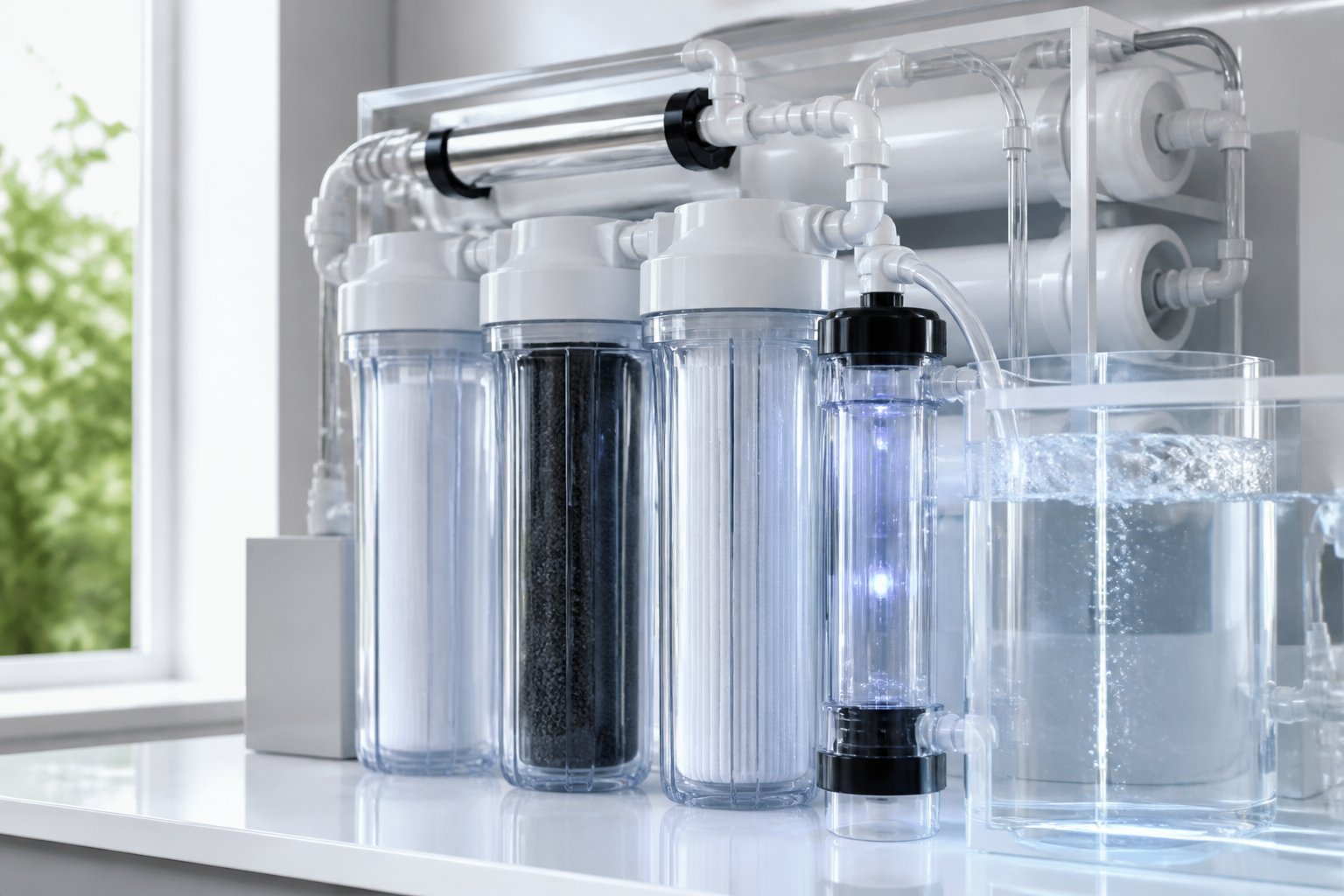
Reverse osmosis systems push water through a semi-permeable membrane to remove dissolved salts, lead, and many organics. Ion exchange softens water by swapping calcium and magnesium for sodium or potassium. KDF media reduces chlorine and controls microbes by redox reactions. Many setups use multi-stage filtration to layer these technologies for thorough treatment.
Stages of Water Treatment
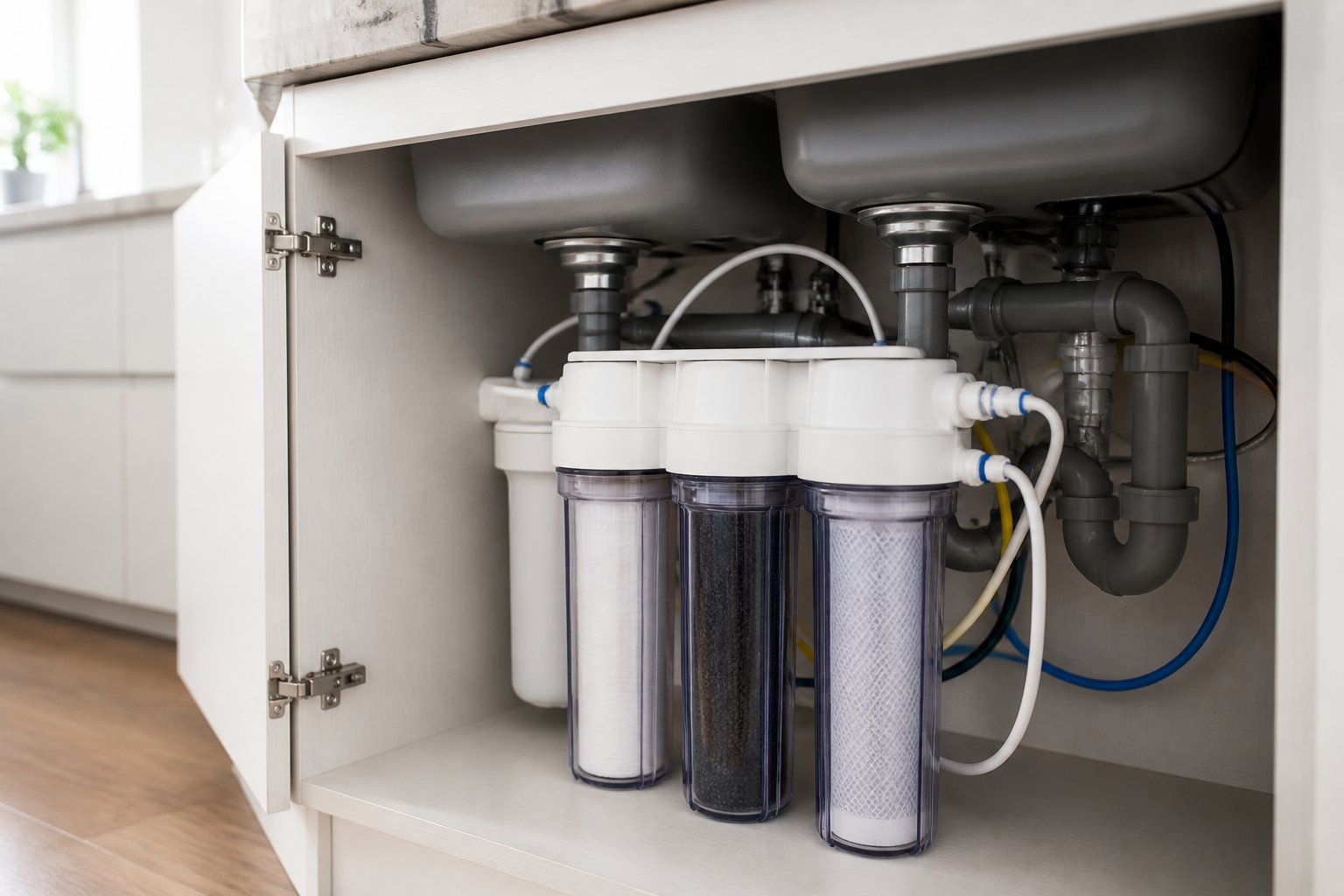
Most systems use a clear stage order. Typical point-of-use setups start with a sediment prefilter (5–1 µm) to protect downstream parts. Next comes a carbon stage — a coconut shell carbon block or catalytic carbon — that removes chlorine, tastes, and organics. After carbon, an RO membrane removes dissolved solids and heavy metals if present.
Some systems include a post-carbon polishing stage to refine taste. Ion exchange or water softener tanks appear before or after RO in whole-home systems to control hardness. UV or chemical disinfection may follow if microbial risk exists. You should check micron ratings and flow rates so stages match your water quality and daily use.
Common Contaminants Removed
You can expect different parts to remove specific contaminants. Sediment filters handle particulates like silt and rust. Carbon blocks and catalytic carbon remove chlorine, VOCs, and many organic chemicals that affect smell and taste. Reverse osmosis systems cut dissolved salts, nitrates, fluoride, and heavy metals such as lead and arsenic.
Ion exchange targets hardness minerals (calcium, magnesium) and can reduce radium. KDF media helps reduce chlorine and hydrogen sulfide and limits bacterial growth on media surfaces. UV systems and proper chlorination handle bacteria, viruses, and protozoa like Giardia. Match the technology to the contaminants you find in your water report for effective removal; you can learn more about system designs and options at this guide to how water purification systems work.
Types of Water Purification Solutions
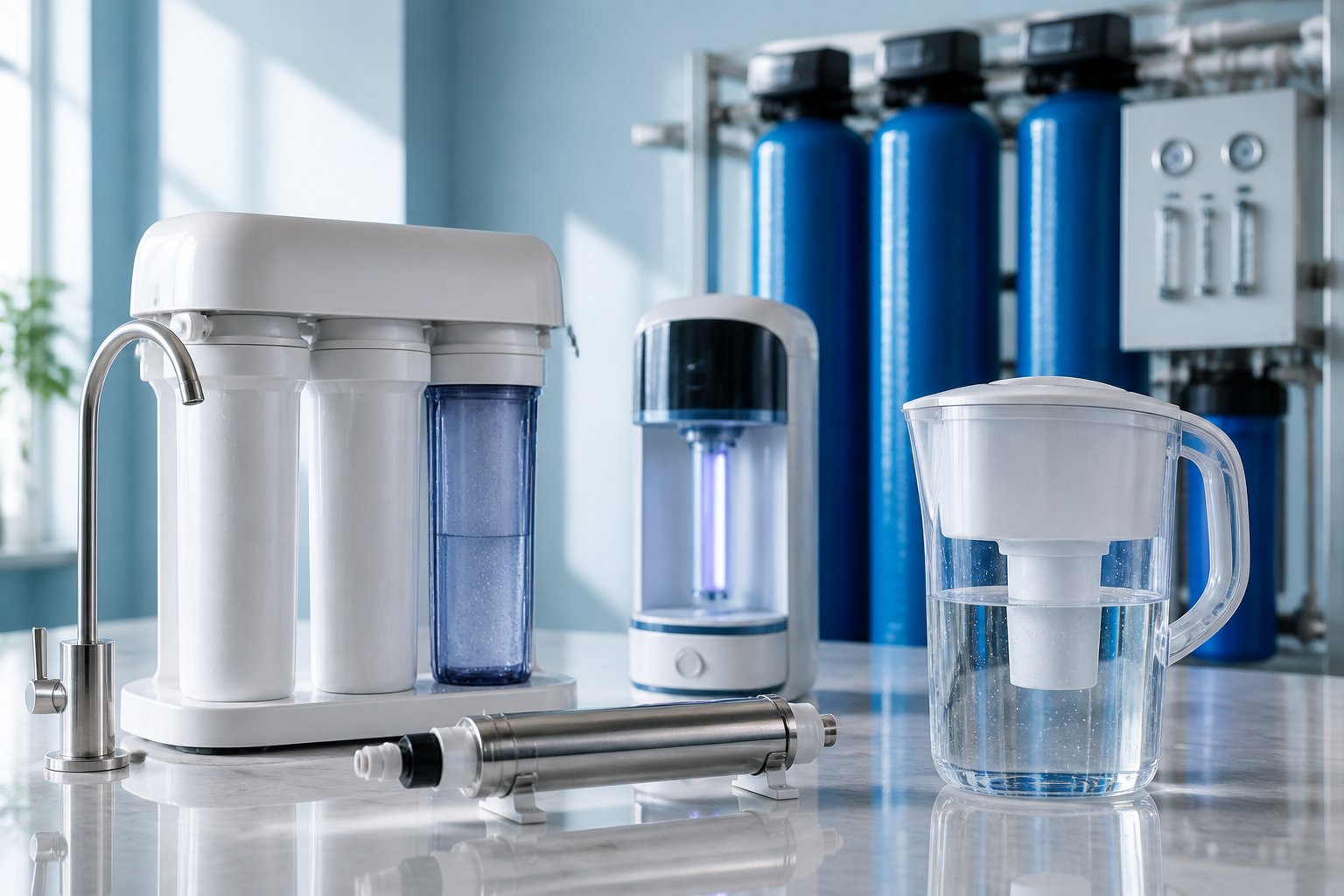
You need systems that match where you use water, the contaminants you face, and how much maintenance you want. Choices range from whole-house systems that treat every tap to small point-of-use units that protect only drinking water.
Whole House vs. Point-of-Use Systems
Whole-house systems (also called whole house water filtration systems or point-of-entry systems) treat water at the main supply so every tap, shower, and appliance gets filtered. These systems often use multi-stage filtration and larger media like granular activated carbon, sediment filters, or backwashing beds. They work well for well water that needs sediment and iron removal, or city water with chlorine taste and odor.
Point-of-use options include under-sink RO units, countertop water filters, and water filter pitchers. You install these at a single tap or keep them on the counter. They cost less and use smaller replacement filters, but they only protect drinking and cooking water. Choose whole-house if you want scale control for appliances and showering; pick point-of-use if you mainly need safe drinking water.
Reverse Osmosis and Its Variants
Reverse osmosis (RO) systems push water through a semi-permeable membrane to remove dissolved salts, lead, nitrates, and many PFAS. Typical RO setups are under-sink units with pre-filters and a storage tank. You’ll see “RO system,” “ro system,” or “reverse osmosis water filter” used interchangeably.
Variants add stages: carbon post-filters for taste, UV for bacteria, or remineralizers to restore healthy minerals. RO wastes some water (reject stream), so check flow rates and tank size. Replacement filters and membrane life are key maintenance items. RO works best for city water with dissolved contaminants or well water with specific dissolved solids that other filters don’t remove.
Water Softeners and Conditioners
Water softeners remove hardness ions (calcium and magnesium). Salt-based softeners use ion exchange resin and periodic brine regeneration. They give very soft water but add sodium to the discharge and require salt handling. Salt-free conditioners use template-assisted crystallization or catalytic media to reduce scaling without brine. These are often marketed as “salt-free softener” or “salt-free conditioner.”
If your main issue is hard water scale in pipes, boilers, or on fixtures, a salt-based softener gives the strongest hardness reduction. If you need lower maintenance or can’t handle brine discharge, a salt-free option or a water conditioner may reduce scale enough for many homes. Pair softening with a whole house filter when your well water also has sediment, iron, or bacteria.
Specialty and Combination Filters
You can combine technologies to target multiple problems. Common combos include whole house water filter systems that pair sediment pre-filters with carbon blocks and an air injection oxidizing filter for iron and sulfur on well systems. Backwashing filters remove heavy sediment and regenerate media automatically for lower upkeep.
Countertop water filters and multi-stage under-sink units often blend sediment, activated carbon, and specialty media. Some systems add UV light for disinfection or a final RO stage for dissolved solids. Choose systems with easy-to-find replacement filters and clear service intervals. For well water, look for packages labeled “best for well water” with iron and bacterial controls. For city water, carbon-based combos often rank “best for city water” because they remove chlorine and taste issues.
Performance Factors and System Sizing
You need to match production, delivery, and maintenance to real lab or facility needs. Focus on the actual flow and pressure at each outlet, the true filtration capacity and lifespan of cartridges, and the micron ratings that determine which particles and contaminants get removed.
Flow Rate and Water Pressure
You must size systems around peak draw rates in gpm (gallons per minute), not just daily totals. Measure the highest simultaneous demand — for example, 3 gpm for a washer plus 0.5 gpm for two benches equals 4 gpm peak. Choose a purifier and pump that deliver that peak at the farthest outlet after pressure drops.
Account for pressure losses in the distribution loop. Every 10–20 feet of tubing and each valve or elbow reduces pressure. If feedwater pressure is low, add a booster pump or a higher-capacity RO stack. Verify the system’s flow vs. pressure curve from the manufacturer and compare it to your required gpm at the endpoint. Test under actual feedwater temperature and pressure because cold or low-pressure feedwater cuts RO output.
Plan storage to cover short peaks. A small storage tank sized for the peak draw can prevent slow flow at the tap while the unit recovers. Size the tank so recovery time between peaks keeps supply above your minimum operational reserve.
Filter Capacity and Lifespan
Filter capacity and lifespan set your operating costs and downtime. Use cartridge capacity ratings (e.g., gallons per cartridge) and convert to your lab’s daily gallons to predict replacement intervals. If a sediment pre-filter is rated for 10,000 gallons and your lab uses 100 gallons per day, expect roughly 100 days life under similar feedwater conditions.
Track factors that shorten lifespan: high TDS, suspended solids, and chlorine. A 5-micron sediment filter often traps visible particles and protects downstream RO membranes. If your feedwater has heavy particulates, move to a larger-capacity or tighter pre-filter and shorten service intervals.
Schedule filter maintenance by both gallons used and calendar time. Always keep spare cartridges on hand and log each change. That avoids unexpected low flow and preserves membrane life. Consider dual parallel filters or larger housings if downtime during change-out would hurt operations.
Micron Ratings and Filtration Effectiveness
Micron ratings tell you what particle size a filter removes. A 5-micron filter captures most sand and silt; a 1-micron filter removes finer particulates. Choose a micron rating that protects critical downstream components without clogging too quickly.
Match micron ratings to purpose: use a 5-micron sediment pre-filter ahead of RO to protect membranes, then a 0.2–0.45 micron membrane or final cartridge for microbial control if needed. Remember that nominal vs. absolute ratings differ: nominal 5-micron filters trap a percentage of particles at that size, while absolute 5-micron filters guarantee near-complete removal.
Balance filtration effectiveness with flow. Tighter micron ratings increase pressure drop and reduce flow rate. If you need high gpm, consider staged filtration: coarse sediment, carbon, then fine polishing. Test and monitor differential pressure across filters; a rising delta indicates the need for replacement or backflush.
Choosing the Best Water Purification System for Your Home
You should focus on proven performance, long-term filter costs, and what contaminants you must remove. Prioritize brands with clear specs, tested removal rates, and easy local or online filter replacement.
Notable System Comparisons
If you need whole-house chlorine and sediment removal, compare Springwell WS1 versus Aquasana Rhino on flow rate and cartridge life. WS1 often gives higher flow and easier DIY install; Rhino can combine carbon and sediment stages for longer service life. For drinking-water RO systems, compare iSpring RCC7AK and Home Master units on remineralization, waste-water ratio, and pump options. RCC7AK adds an alkaline stage; Home Master often reduces tubing connections and bacterial risk.
For point-of-use options, PUR and pitcher-style filters beat no-filter taps on taste and chlorine. Crystal Quest and Culligan have mid-range under-sink models with multiple stages for lead and VOCs. Also weigh ongoing costs: RO and whole-house systems have higher upfront cost but lower per-gallon cost; pitchers and faucet filters are cheap upfront but need frequent cartridge replacement.
Certifications and Safety Standards
Verify NSF/ANSI certifications on any model you consider. Look specifically for NSF/ANSI 42 for taste/odor and chlorine, 53 for health-related contaminants like lead, and 58 for reverse osmosis systems. Many brands list certifications on product pages; confirm by searching the NSF database or the Water Quality Association listings.
Also check if a system carries WQA or independent lab test results. Certification tells you a filter was tested to remove specific contaminants at stated rates. Don’t assume general brand reputation replaces certification—ask for model-level NSF claims and compare those against your local water report.
Installation and Maintenance Essentials
Plan where the system will sit, what contaminants you need to remove, and how often you can service it. Proper placement, correct fittings, and a simple maintenance plan save time and money and keep water tasting better.
DIY vs. Professional Installation
You can install under-sink carbon or single-stage whole-house units if you have basic tools and can shut off the water. DIY common steps: shut main valve, cut or tee the cold-water line, mount the bracket, connect IN/OUT lines, and pressurize slowly while checking for leaks. You should know local code requirements for air gaps and permits.
Hire a professional when the main line is hard to access, you need a bypass loop, or you plan multi-stage systems (RO + UV + softener). Pros handle pressure issues, tank pre-charge, proper drain saddles for RO, and code compliance. Labor typically adds several hundred dollars but reduces rework risk and protects long-term performance.
Filter Replacements and Costs
Replacement schedule depends on filter type and water quality. Sediment cartridges often need change every 3–12 months. Under-sink carbon filters usually last 6–12 months. RO membranes last 2–5 years. Some specialty filters advertise long lives (up to 10 years) but check manufacturer specs and testing data before assuming such longevity.
Expect parts costs like this range: carbon cartridges $20–$80, sediment housings $10–$50, RO membranes $50–$250. Add a small annual budget for fittings, O-rings, and prefilters. Keep records of install dates and baseline TDS or chlorine readings so you replace parts before taste or performance drops.
System Upkeep and Troubleshooting
Do these routine tasks: inspect fittings monthly, check pressure gauges, and replace prefilters on schedule. Flush new carbon cartridges to remove fines. For whole-house systems, backwashing sediment filters (if present) prevents clogs and reduces scale buildup upstream of fixtures.
If flow drops, test for a clogged filter, low incoming pressure, or a closed valve. For bad taste, replace carbon media or check the RO post-filter; measure TDS to confirm membrane health. If you find leaks, tighten unions or replace worn O-rings. Call a professional for persistent low pressure, bacteriological concerns, or when you must comply with local plumbing codes.