Key Technologies and Filtration Stages
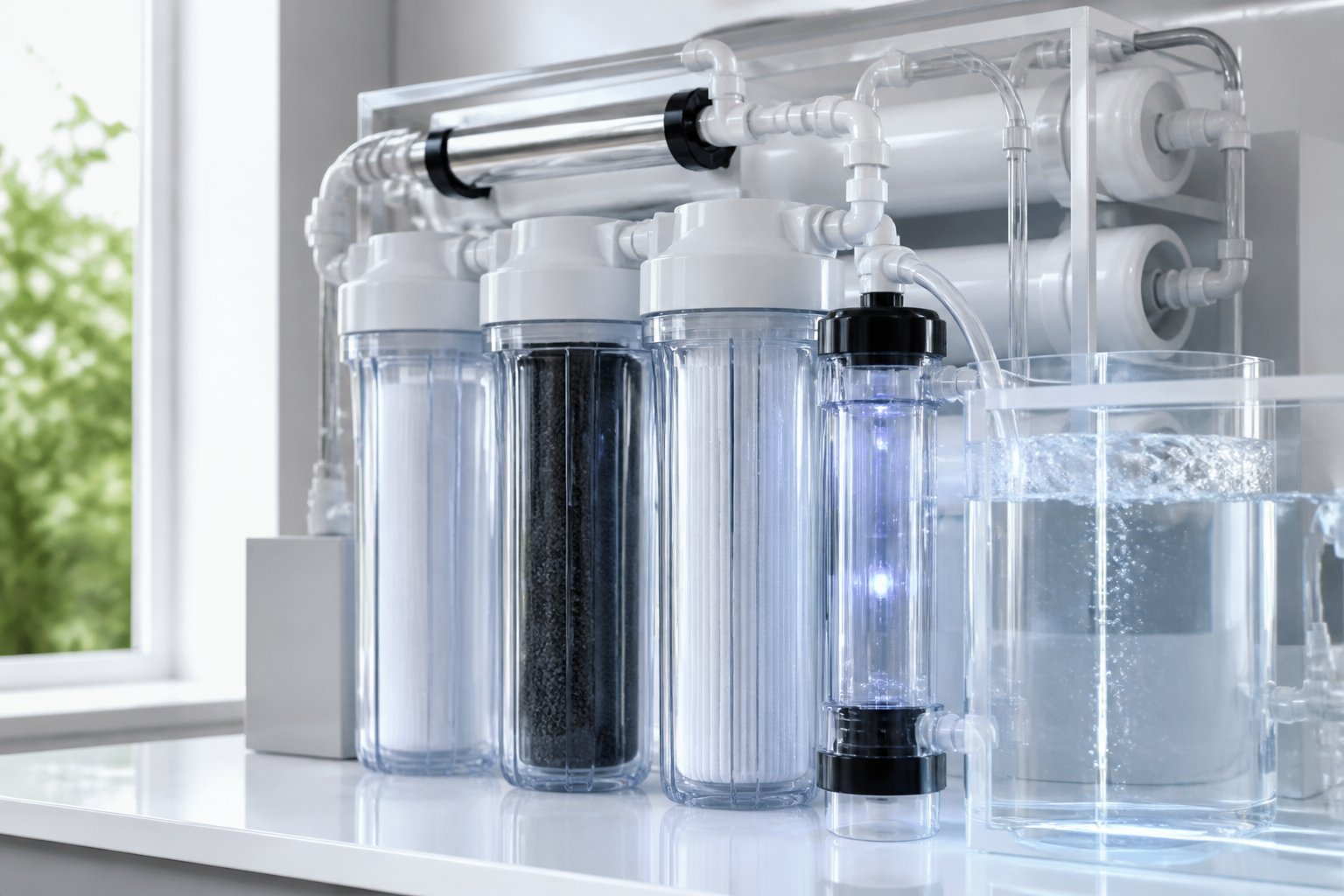
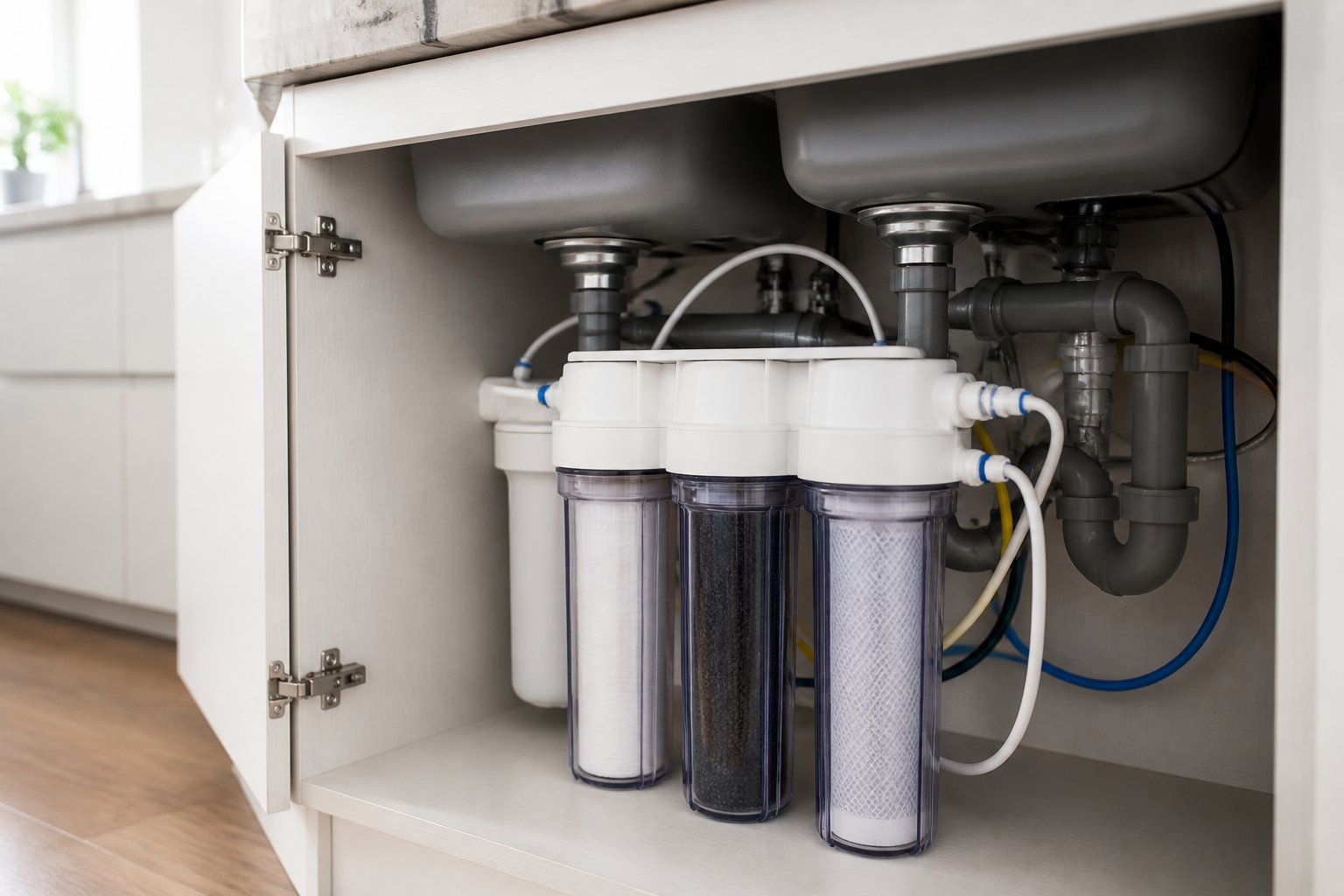
You get cleaner water by combining layers that target different particles and chemicals. Each stage has a clear job: stop sediment, trap chemicals, remove dissolved contaminants, or restore healthy minerals for taste.
Activated Carbon and Carbon Block Filters
Activated carbon captures chlorine, many VOCs, and bad tastes. Carbon block filters pack powdered carbon into a dense cartridge. That density forces water through tiny channels, increasing contact time and trapping more contaminants than loose granular carbon.
Look for coconut carbon if you want higher surface area and low ash content. Install a sediment pre-filter ahead of the carbon block to protect it from grit and extend life. Typical replacements run 6–12 months depending on use and water quality.
What matters to you: carbon removes chlorine and improves taste fast, but it won’t remove dissolved salts, fluoride, or many metals. Use it as part of a multi-stage under-sink filter for balanced performance.
Ion Exchange and Catalytic Carbon
Ion exchange swaps unwanted ions like lead, copper, and some hardness minerals for sodium or hydrogen ions. This reduces heavy metals and softens water slightly. Resin beds hold the exchange media and need periodic regeneration or cartridge replacement.
Catalytic carbon works like activated carbon but also treats chloramines and supports advanced reduction of certain PFAS when paired correctly. It resists oxidation better than standard carbon and keeps its flow rate longer in chloramine-treated systems.
Pair ion exchange with a sediment pre-filter and carbon stages for best results. Check manufacturer claims and independent test data, since performance varies with flow rate, contact time, and specific contaminant levels in your supply.
Reverse Osmosis Systems and Membranes
Reverse osmosis uses a semi-permeable RO membrane to remove dissolved solids, nitrates, fluoride, PFAS, and many heavy metals. High pressure pushes water through the membrane, leaving concentrated waste (brine) that drains away. RO membranes are rated by rejection percentage—higher is better for contaminants like lead and fluoride.
RO systems usually include a sediment pre-filter and one or more carbon stages before the membrane to protect it and improve taste. Expect a dedicated faucet, and consider wastewater ratio: modern units range from about 1:1 to 3:1 waste-to-pure water. Replace the membrane every 2–4 years and pre/post-filters per the schedule.
If you need broad contaminant removal under-sink, RO membranes deliver the widest coverage, but plan for space, waste water, and ongoing filter and membrane swaps.
Remineralization and Alkaline Stages
Remineralization adds calcium, magnesium, or trace minerals back into RO-stripped water to improve taste and raise pH. Alkaline remineralization stages often use media like calcite or a blend that slowly dissolves to adjust total dissolved solids (TDS) and hardness.
Use a remineralization filter when you dislike “flat” RO water or want slightly higher pH. These stages sit after the RO membrane and before the faucet, so they don’t affect membrane life. Cartridge life varies; check manufacturer guidance.
Remember: remineralization improves flavor and mouthfeel, but it does not restore contaminants removed earlier. Combine it with proper pre-filters—sediment and carbon—to keep the whole under-sink water filter running reliably.
Performance and Certification Standards
You need clear facts about what the filter will actually remove, how fast it will deliver water, and how often you must change cartridges. Look for third‑party testing and labels that match the contaminants in your water.
Contaminant Reduction and Removal Effectiveness
Check lab-tested claims for the specific contaminants you want removed. For lead, pick filters certified to reduce lead to trace levels; certification listings will show the test conditions and percent reduction. For PFAS, look for filters tested with the PFAS compounds present in your water, since not all adsorptive media capture every PFAS molecule.
TDS reduction matters if you want lower dissolved mineral content. Reverse osmosis systems typically deliver the largest TDS drops. Carbon block and ion‑exchange filters remove organics, chlorine, and some PFAS but have limited TDS effect. For well water, verify bacterial and iron removal ratings; many under‑sink cartridges do not treat bacteria without specific media or UV added.
NSF/ANSI and WQA Certification Requirements
Rely on recognized standards to verify claims. NSF/ANSI 42 covers aesthetic effects like chlorine, taste, and odor. NSF/ANSI 53 covers health‑related contaminants such as lead. NSF/ANSI 58 applies to reverse osmosis systems and shows RO membrane and system performance. NSF/ANSI 401 lists reduction of emerging contaminants; check whether specific PFAS are included. NSF/ANSI 372 addresses lead‑free construction.
You can confirm listings on certification body sites. The National Sanitation Foundation posts certified product details, and WQA’s Gold Seal or IAPMO listings show independent test results. Look for the standard number on packaging and match it to the contaminants reduced in the certificate.
Water Flow Rate and System Efficiency
Flow rate is usually given in gallons per minute (gpm) or gallons per day (for RO). A typical under‑sink carbon cartridge delivers 0.5–1.5 gpm at household water pressure. RO systems often supply 0.1–0.5 gpm of treated water and state a daily production rate (e.g., 50–75 gallons per day).
Check pressure drop: higher reduction media or clogged cartridges lower flow. If you need high flow to a second faucet or appliance, choose higher‑capacity cartridges or a system with a storage tank. For municipal water with stable pressure, most units meet demand; for low‑pressure well systems, confirm minimum inlet pressure requirements.
Filter Lifespan, Capacity, and Replacement Frequency
Filter life depends on capacity (gallons) and contaminant load. Manufacturers list rated capacity—e.g., 1,000–10,000 gallons—but actual life varies with water quality and contaminant levels. Heavier chlorine or sediment shortens carbon life; high iron or silt shortens cartridge life rapidly.
Follow replacement intervals by both gallons and time: many cartridges recommend 6–12 months or a specific gallon count. RO membranes last longer (2–5 years) but need prefilter changes on schedule. Keep spare cartridges and note the certified capacity on the product certificate to match your household water use.
System Types, Top Brands, and Leading Models
You’ll find systems that range from a single carbon cartridge up to multi-stage reverse osmosis stacks. Choose by what you must remove (chlorine, lead, PFAS, hardness) and by space, budget, and how often you want to change filters.
Multi-Stage Under-Sink Filters
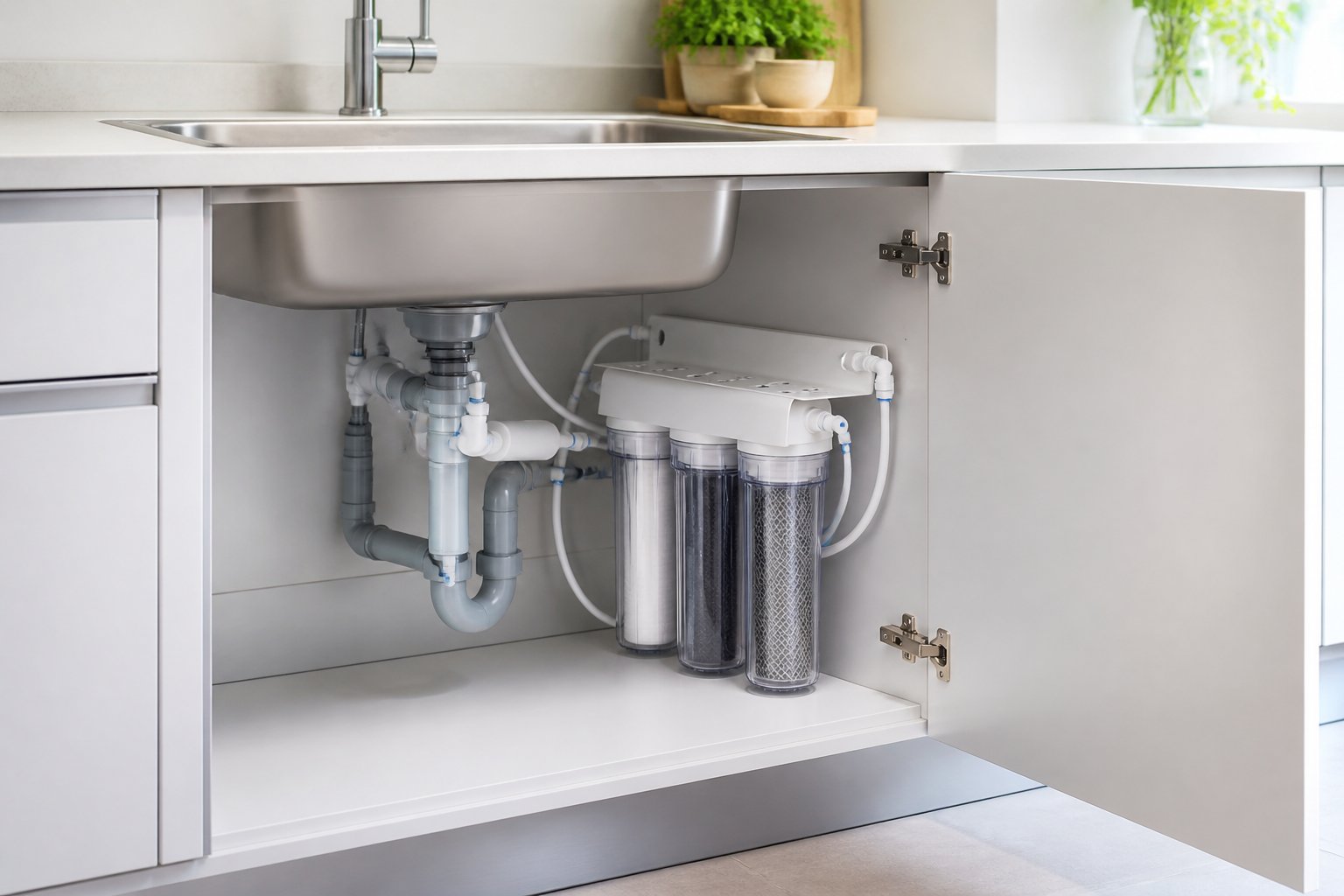
Multi-stage under-sink filters layer different media to tackle taste, sediment, and specific contaminants. A common setup pairs a sediment pre-filter, a solid carbon block for chlorine and organic chemicals, and an ion-exchange or catalytic carbon stage for heavy metals and PFAS. You get better contaminant coverage and longer filter life than a one-stage filter, but the system takes more cabinet space and costs more to maintain.
Look for NSF certifications (42, 53, 401) so you know what each stage actually removes. Brands like Aquasana offer three-stage Claryum systems that target a wide range of contaminants and are sized for typical household flows.
When you choose, check filter capacity (gallons), flow rate (gpm), and annual filter cost. Those three numbers tell you long-term value more clearly than price alone.
Tankless and Tank-Based Reverse Osmosis
Reverse osmosis (RO) systems come in tankless and tank-based designs. Tank-based RO stores filtered water in a pressurized tank for faster faucet flow and higher immediate volume. Tankless RO uses a direct-flow membrane and an onboard pump or membrane tech, saving cabinet space and reducing water waste compared with older RO tanks.
Tank-based RO like the common APEC ROES-PH75 gives consistent purity and is well-suited when you want a reserve of drinking water. Tankless models such as Waterdrop 15UA or Waterdrop G3P800 aim to cut waste and save room; they often include smart monitoring and lower reject ratios. Both need periodic membrane and post-filter changes and will lower TDS more than carbon-only systems.
If you have well water, prefer RO systems rated for higher sediment or pair them with a robust pre-filter. Also note that RO removes minerals, so some systems include a remineralization stage if you prefer taste or want some hardness left.
Best-Rated and WQA-Certified Systems
Look for systems with independent certifications: NSF and WQA validate specific contaminant claims and manufacturing practices. WQA Gold Seal or NSF/ANSI 58 confirms RO performance. Systems with NSF 401 or 53 cover pharmaceuticals and health-related contaminants, while NSF 42 focuses on aesthetic issues like chlorine taste and odor.
Highly rated consumer picks include compact multipoint units from Multipure and Aquasana Claryum lines for comprehensive non-RO filtration. For RO, APEC and Waterdrop rank highly in lab tests and user reviews for contaminant reduction and reliability. If you want PFAS removal, verify the filter or membrane is certified for PFAS or labeled accordingly.
Check real-world reviews for ease of installation, replacement filter availability, and long-term flow stability before you buy.
Comparison of Popular Models and Features
Compare systems by these quick checks:
- Filtration type: carbon-only vs. RO.
- Stages: one-stage (simple taste), three-stage (sediment + carbon + specialty), or multi-stage RO (membrane + post-filters).
- Footprint: compact housings or tankless RO save cabinet space.
- Cost: initial price plus yearly filter/membrane cost.
- Certifications: NSF 42/53/401/58 or WQA Gold Seal.
Make a short checklist: what contaminants you must remove, how much cabinet space you have, whether you need a tank, and your annual filter budget. Use that to narrow to the best under-sink water filter for your needs.
Installation, Maintenance, and User Experience
You can install many under-sink filters yourself with basic tools and a little plumbing know-how. Expect periodic filter changes, a choice of faucet options, and the need to match the unit to your water source and plumbing.
DIY and Easy Installation Options
Many under-sink systems use direct-connect fittings or quick-connect tubing that slides onto the cold-water valve. You typically shut off the cold supply, cut the line, attach a tee or adapter, and connect the filter housing. Some models use a twist-off filter cartridge that screws into a bracket for faster cartridge swaps.
If you prefer no under-sink work, consider a faucet-mounted filter or a system with a dedicated faucet hole. Follow the manufacturer’s torque and sealant instructions to avoid leaks.
Filter Replacement and Annual Cost
Filter lifespan depends on flow and contaminant load. Carbon cartridges often last 3–6 months or 500–1,000 gallons, while specialty or reverse osmosis membranes can last 1–3 years. Keep a replacement schedule in a visible spot under the sink.
Estimate your annual filter cost by adding cartridge prices and any lab or test-strip costs. Example: two carbon cartridges at $30 each = $60 per year. Add periodic water test strips for $10–$30 to confirm performance. Check your local water quality report to predict how often you’ll need replacements.
Dedicated Faucets and Smart Features
A dedicated faucet gives you always-filtered water and avoids changing the main kitchen tap. These faucets install in a single-hole or an existing unused hole in the sink or countertop. They keep flow steady and simplify plumbing.
Some newer systems offer smart indicators that track gallons filtered or time to next replacement. These can be LED lights on the head or app alerts. Smart faucets can show flow rate and remaining filter life. Choose features that match your habits—simple mechanical indicators work fine for most users.
Compatibility With Water Sources and Plumbing
Match filter type to the contaminants in your water quality report or to results from water test strips. Use carbon filters for taste, odor, and chlorine; choose reverse osmosis for dissolved solids and nitrates. If you have well water, test for bacteria and heavy metals before selecting a system.
Confirm plumbing fit: measure the cold-water line size and check for space under the sink. Some homes need an adapter for nonstandard valves. If your system needs drainage (RO units), plan a drain saddle installation on the sink trap. When in doubt, consult a plumber for complex setups.
Conclusion
The right under-sink filter comes down to layering: sediment protects your media, carbon and ion exchange handle chlorine and metals, and RO or catalytic stages tackle the toughest contaminants like PFAS and dissolved solids. Check NSF/ANSI certifications for your specific concerns, match flow rate and capacity to your household, and budget for annual filter costs before you commit to a system.
Ready to find the right fit for your kitchen? Visit Irvine Water Filtration to explore under-sink filtration systems built for your water.