Essential Filtration Technologies and Standards
You need clear, reliable choices for removing specific contaminants and for verifying filter claims. This section explains a common high-performance technology, the key certification standards buyers look for, and how different filters remove pollutants.
Reverse Osmosis Explained
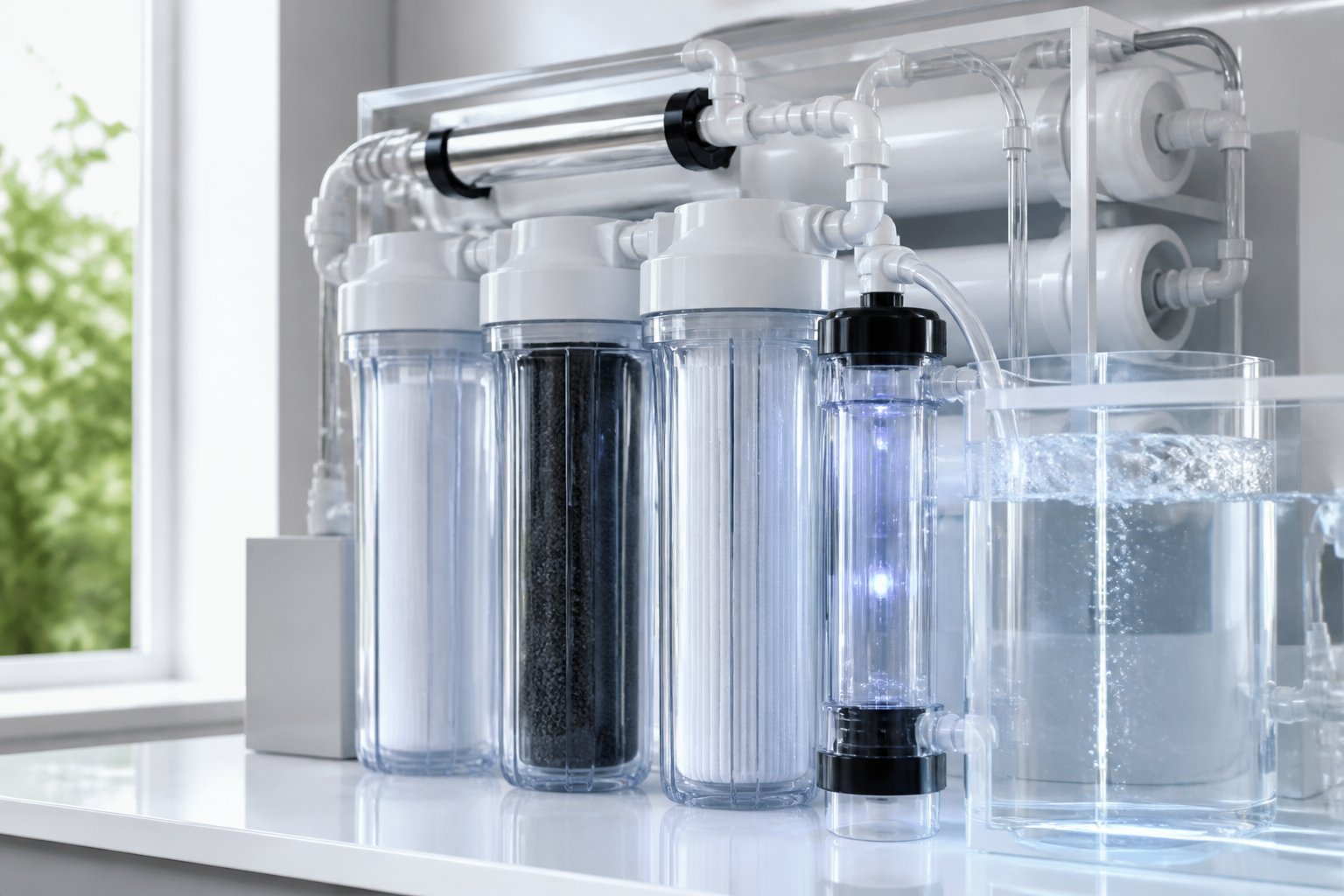
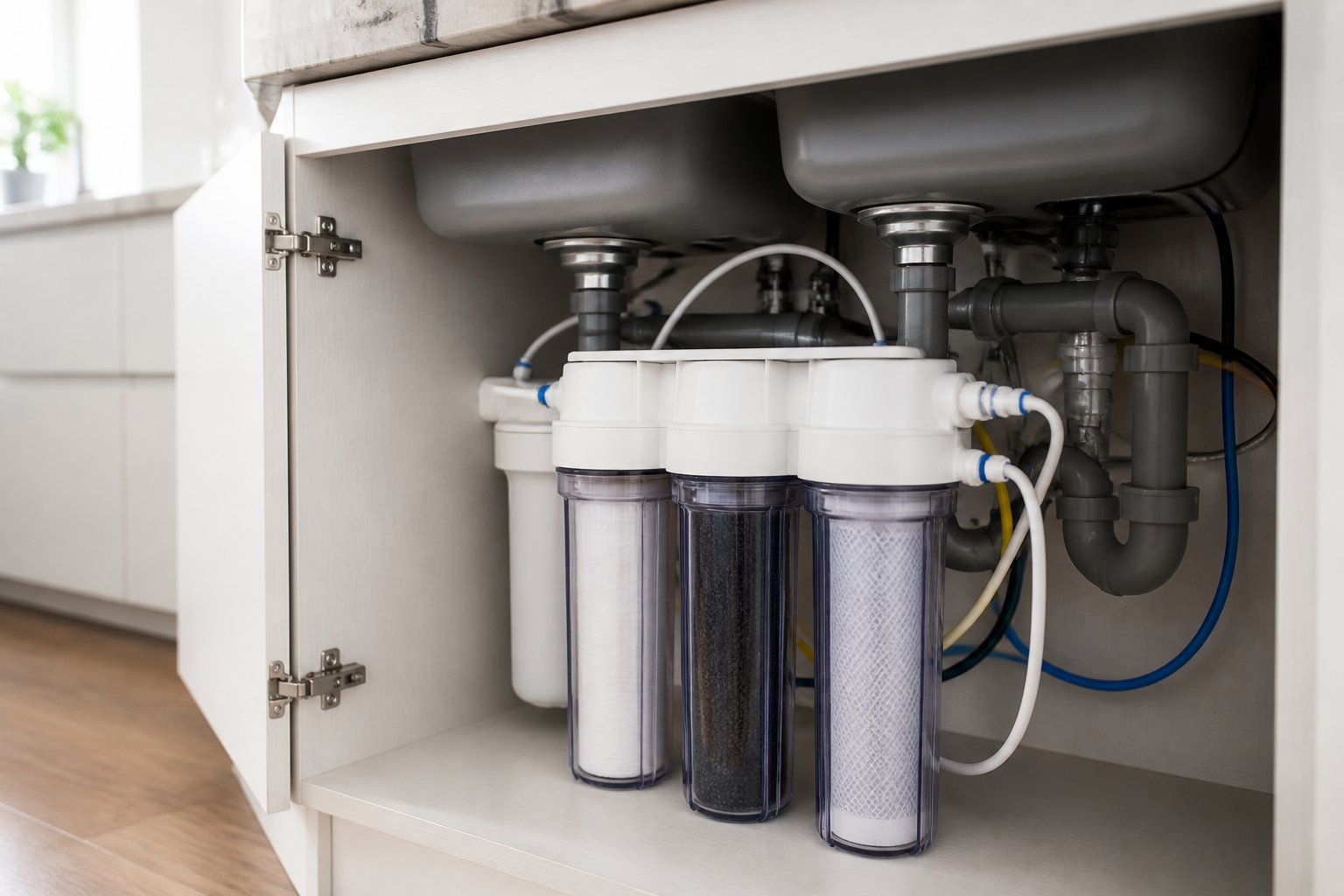
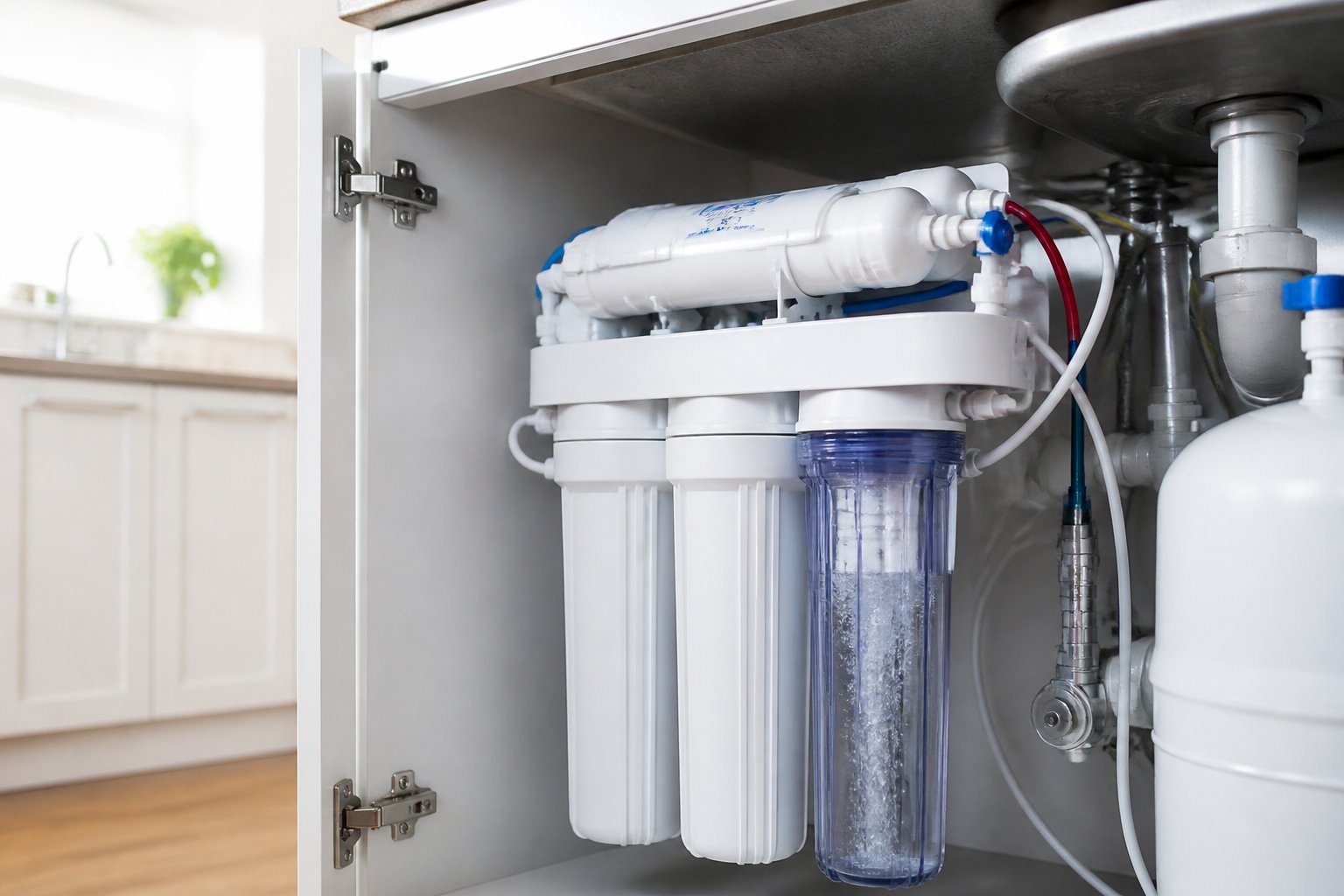
Reverse osmosis (RO) forces water through a semipermeable membrane to remove dissolved solids. Your household RO system usually includes pre-filters (sediment and carbon), the RO membrane, and a post-carbon filter to polish taste. Systems sit under the sink or at the point of entry and often include a storage tank because RO flow is slow.
RO removes salts, lead, fluoride, nitrates, and many dissolved organics. It does not rely on chemical reactions; removal is physical, so you can expect consistent performance if you change pre-filters and the membrane on schedule. RO wastes some water—typical ratios range from 3:1 to 1:1 waste to product—so check manufacturer specs before you buy.
NSF/ANSI Certification and What It Means
NSF/ANSI standards test and certify filter claims so you know a product performs as advertised. Look for certifications like NSF/ANSI 42 for chlorine, taste, and odor reduction, and NSF/ANSI 53 for health-related contaminants such as lead and cysts. Certified products have been lab-tested to meet reduction limits and material safety rules.
A certified label means independent verification of both contaminant reduction and that filter materials won’t leach harmful substances. Certification is voluntary but matters because many municipal and commercial specs require it. You can confirm a product’s claim by checking the manufacturer’s listing on the certifier’s website.
Understanding Contaminant Removal
Different technologies target different contaminants, so match the filter to the risk in your water. Activated carbon excels at removing chlorine, bad taste, and some organic chemicals. Ion exchange resins remove hardness ions and some radioactive contaminants. RO and membrane systems remove dissolved salts, heavy metals, and many small molecules.
Not all filters remove microbes. If bacteria or viruses are a concern, choose systems certified for microbial reduction or use disinfection methods. Always check the product’s certified contaminant list instead of assuming broad protection. Replace cartridges on the schedule given by the maker to keep removal rates within certified ranges.
Types of Water Filters and How They Work
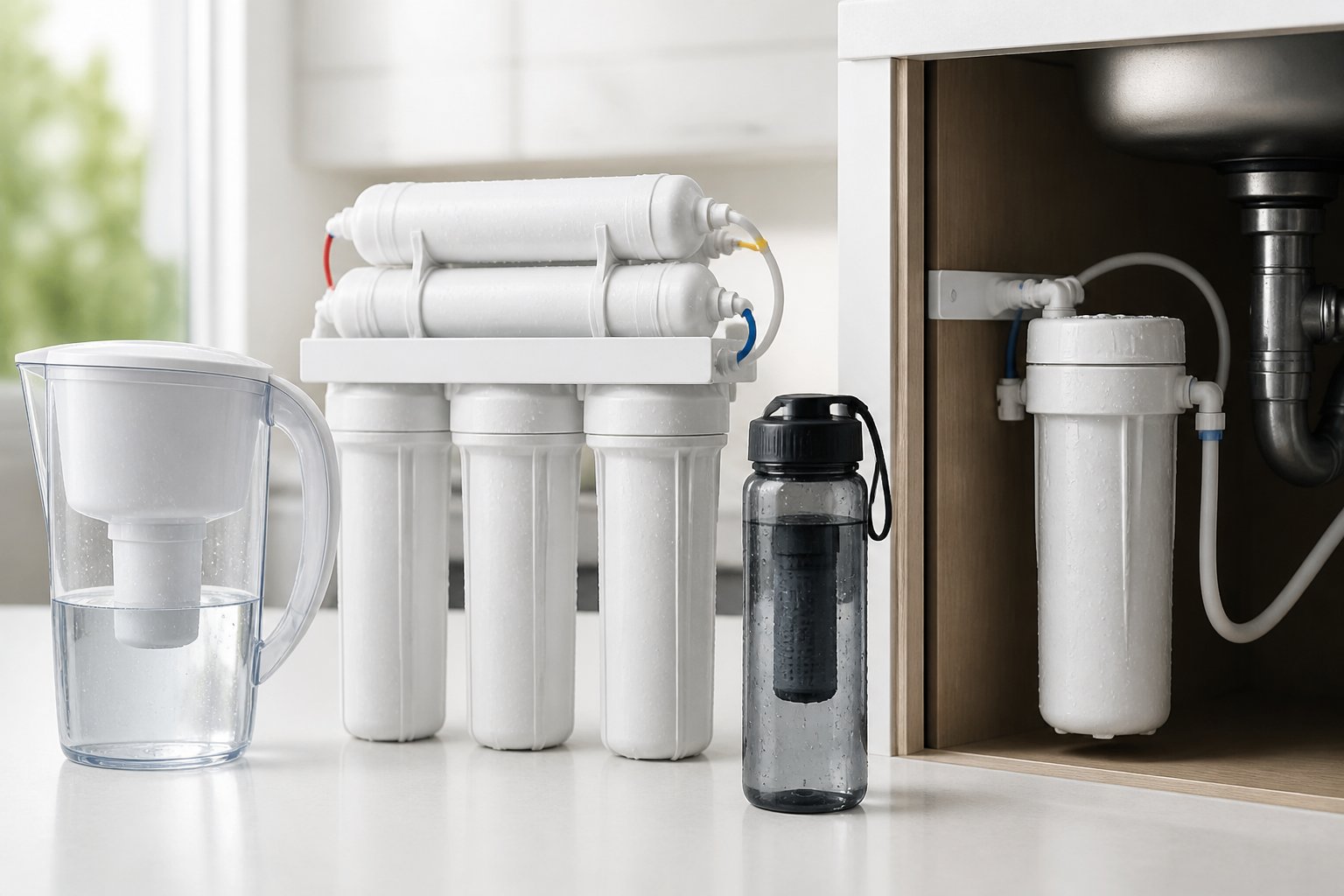
You can choose filters that sit under your sink, sit on the counter or in a fridge, or attach directly to your faucet. Each type treats different contaminants, fits different budgets, and needs different space and maintenance.
Under-Sink Systems
Under-sink water filters install inside the cabinet below your sink and connect to your cold-water line. Many use multiple stages: a sediment prefilter, an activated carbon stage for chlorine and VOCs, and sometimes a reverse osmosis (RO) membrane for salts, fluoride, and heavy metals. RO systems often include a small storage tank so you get steady flow at the tap.
You get the cleanest tap water with under-sink units, but installation is more involved. Expect plumbing connections and occasional cartridge or membrane changes. If you want whole-tap performance at one kitchen faucet and remove lead, chromium, or fluoride, choose a certified under-sink RO or multi-cartridge system.
Countertop and Pitcher Filters
Countertop water filters sit on the counter or connect to the faucet with a tube; pitcher filters are simple jugs with a built-in cartridge. Both mainly use activated carbon to reduce chlorine, bad taste, and many organic chemicals. Some countertop units add sediment stages or small RO membranes for better contaminant removal.
Pitchers are cheap and portable; replace the cartridge every 2–6 months. Countertop systems give higher capacity and faster flow, and some countertop RO units remove nitrates and heavy metals. Choose a pitcher for low cost and portability, a countertop filter if you want better performance without under-sink plumbing.
Faucet-Mounted Solutions
Faucet-mounted filters attach directly to your kitchen faucet and filter water on demand. Most use granular or carbon-block cartridges to cut chlorine, improve taste, and reduce some pesticides and lead. You usually switch between filtered and unfiltered flow with a lever on the unit.
These are the easiest to install and cheapest to run. Cartridges need replacement roughly every 2–4 months depending on use. If you rent, have limited space, or want quick taste improvement at one tap, a faucet filter can be the best, low-cost option. For broader contaminant removal, combine with a pitcher or under-sink RO.
Maintenance and Performance Optimization
Keep your filter cartridges fresh, test your treated water, and watch flow and taste. Change parts on schedule, sanitize housings yearly, and use simple tests to spot drops in performance.
Replacement Filters and Lifespan
You should follow the manufacturer’s change schedule printed on each cartridge. Most sediment and carbon pre-filters need replacement every 12–24 months; carbon post-filters and remineralizers also commonly fall in that window. Replace a membrane in reverse osmosis systems every 2–4 years or sooner if your TDS rejection drops below 90%.
Watch for clear signs: slower flow, bad taste, higher TDS readings, or visible dirt in housings. Keep spare cartridges and O-rings on hand so you can swap parts quickly. When you change filters, sanitize housings and inspect O-rings for cracks or debris. Tighten housings by hand plus a quarter turn and flush new cartridges for 5–10 minutes before drinking.
Proper Water Filter Testing
Test monthly with a digital TDS meter and a basic flow check. Compare tap TDS to filtered TDS; aim for at least 90% reduction in RO systems or company-stated levels for other types. Record readings and dates in a simple log to spot steady decline.
Also do a taste and odor check every month. For more detail, use home test kits for chlorine, lead, or bacteria when you suspect a problem. If you detect contamination or TDS slips rapidly, call a certified technician or send a sample to a lab. For step-by-step maintenance and replacement timelines, contact Irvine Water Filtration for whole-house and RO maintenance from a trusted industry guide.