Whether a water softener is worth it in Irvine comes down to arithmetic most homeowners never actually run: what hard water is quietly costing the house, set against what a softener costs to buy, feed and maintain. The complication here is that the first half of that equation is not a fixed number. The Irvine Ranch Water District blends local groundwater with imported supply, and the hardness reaching any given address moves with the season and with where in the district that address sits. The honest answer is conditional — and every one of those conditions can be measured before anyone signs anything.
What Is Hard Water Actually Costing Your Household?
Hard water costs a household in three places: energy, equipment life, and the consumables bought to work around it. The U.S. Geological Survey is direct about the mechanism. When hard water is heated in a home water heater, solid deposits of calcium carbonate form, and that scale can reduce the life of equipment, raise the costs of heating the water, lower the efficiency of electric water heaters, and clog pipes.
That matters more than it first sounds, because of where water heating sits in a household's energy budget. The U.S. Department of Energy puts water heating at about 18% of a home's energy use, typically the second largest energy expense in any home. Scale on a heating element is a surcharge on the second-biggest line in the utility bill, charged quietly, every day it stays there.
The third cost shows up at the sink. USGS notes that soap reacts with the calcium in hard water to form soap scum, so more soap or detergent is needed to get things clean — hands, hair, laundry. None of this is dramatic in any single month. Across the service life of a water heater and a washing machine, it compounds.
How Hard Is Irvine's Water, and Why Does the Number Move?
Irvine's water is hard, but not uniformly, and that variation is what trips up the decision. IRWD states that water with 10 grains or more is considered hard, and that the degree of hardness varies depending on the time of year and your location within the district.
The supply mix is the reason. About 65% of IRWD's water is local groundwater drawn from wells in the Orange County Groundwater Basin, and the remaining 35% is imported. Imported Colorado River and Northern California water is typically hard, while IRWD's own well water is moderately hard, so the blend arriving at a tap shifts as the district leans on one source or the other.
Location matters alongside season. IRWD notes that customers in Lake Forest and Newport Coast receive mostly imported water year-round and therefore see more consistently hard water than addresses sitting deeper in the groundwater share. For a homeowner weighing a softener, the practical consequence is this: a single test reading taken in a single month is a snapshot, not a verdict.
What Does a Softener Fix — and What Does It Leave Alone?
A softener fixes hardness, and hardness only. Ion exchange pulls calcium and magnesium out of the water and leaves sodium in their place, which ends scale, soap scum, spotted glassware and stiff laundry at the source rather than managing them downstream. What it does not touch is everything hardness was never responsible for.
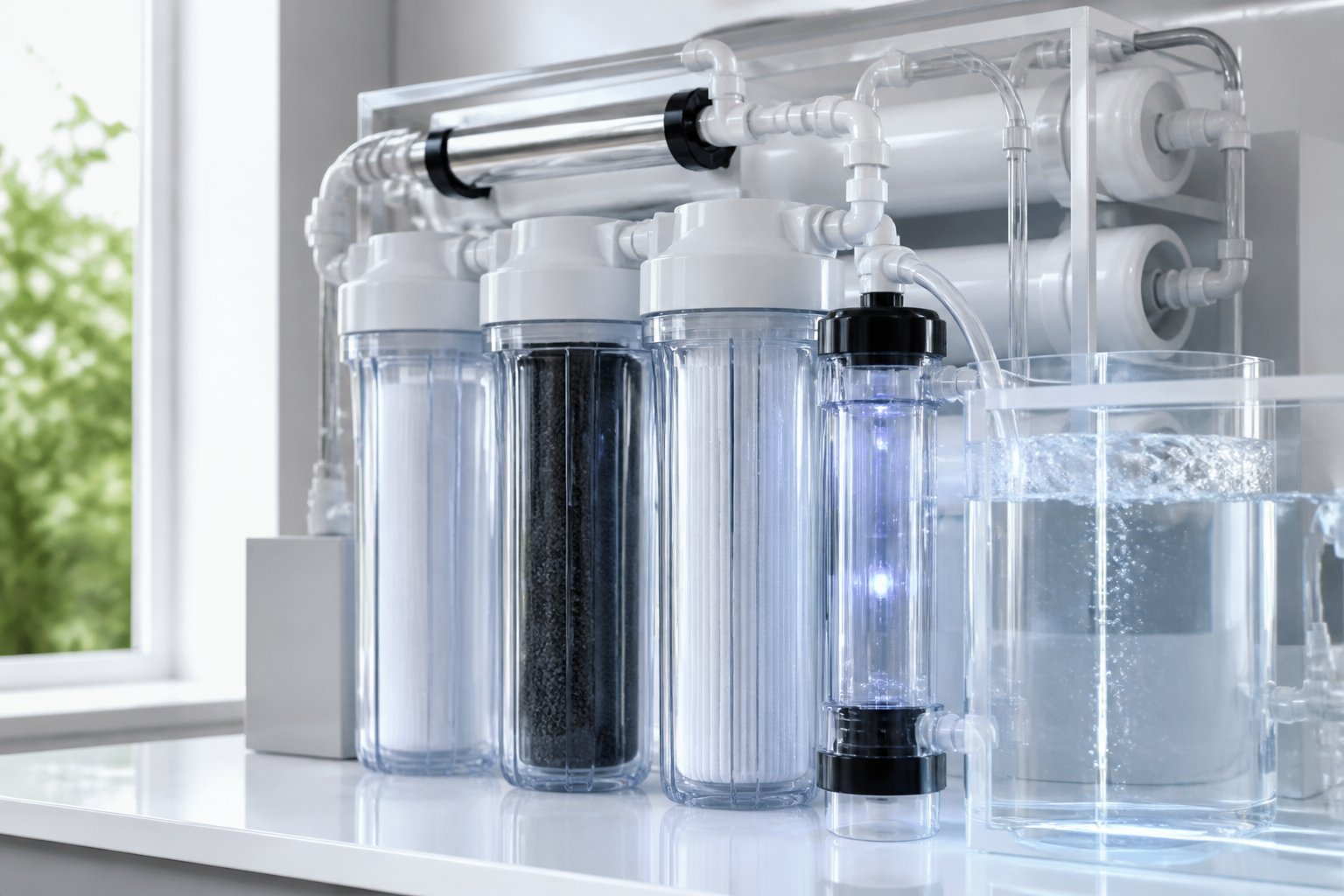
Chlorine taste, a chemical smell in the shower, sediment and dissolved solids all pass through a softener unchanged. Those belong to carbon filtration, sediment filtration, or a reverse osmosis system at the drinking tap. Buying a softener to fix how the water tastes is the most common way a homeowner ends up disappointed by an appliance that is working exactly as designed.
It is also not a health upgrade, and reputable sources say so without hedging. Penn State Extension puts it plainly: water softening simply removes hardness minerals and eliminates problems that are a nuisance and not a threat to human health. Treat a softener as a plumbing-and-laundry purchase. If the worry is what might be dissolved in the drinking water, that is a different test and a different device.
What Does Owning a Softener Cost You Each Year?
The purchase price is the smallest part of this question; what the unit consumes to keep working is what decides whether it earns its place. Three recurring inputs come with every salt-based softener: salt, water, and service.
Water is the one most people underestimate. Penn State Extension puts regeneration at about 50 gallons of water for each cycle, flushed down the drain to rinse the resin clean.
Sodium is the second. The same source puts the exchange at 7.5 milligrams per quart for every grain per gallon of hardness removed. At Irvine-level hardness that is worth knowing in advance, and worth a conversation with a doctor in any household managing sodium intake closely.
The third input is specific to this city and is not a dollar figure at all. IRWD discourages self-regenerating water softeners — the kind the owner refills with rock salt or potassium — because the salty brine discharged by self-regenerating water softeners is not removed during the recycling process, and the more of them in the service area, the saltier the district's recycled water becomes. The district's own suggested alternative is a softener service that picks up and exchanges the cylinder, so the salt never goes down the drain. Equipment and installation prices swing too widely with hardness, bypass plumbing and drain access to be useful as an abstract range; the number worth having is the written one on a quote for your house.
Who in Irvine Should Probably Skip One?
Several households should not buy a softener, and the reasons are specific rather than philosophical. The first is low hardness. Penn State Extension notes that levels below 7.0 grains per gallon will probably not cause major scaling and soap film, so a reading in that range means the problem on the table is mostly cosmetic.
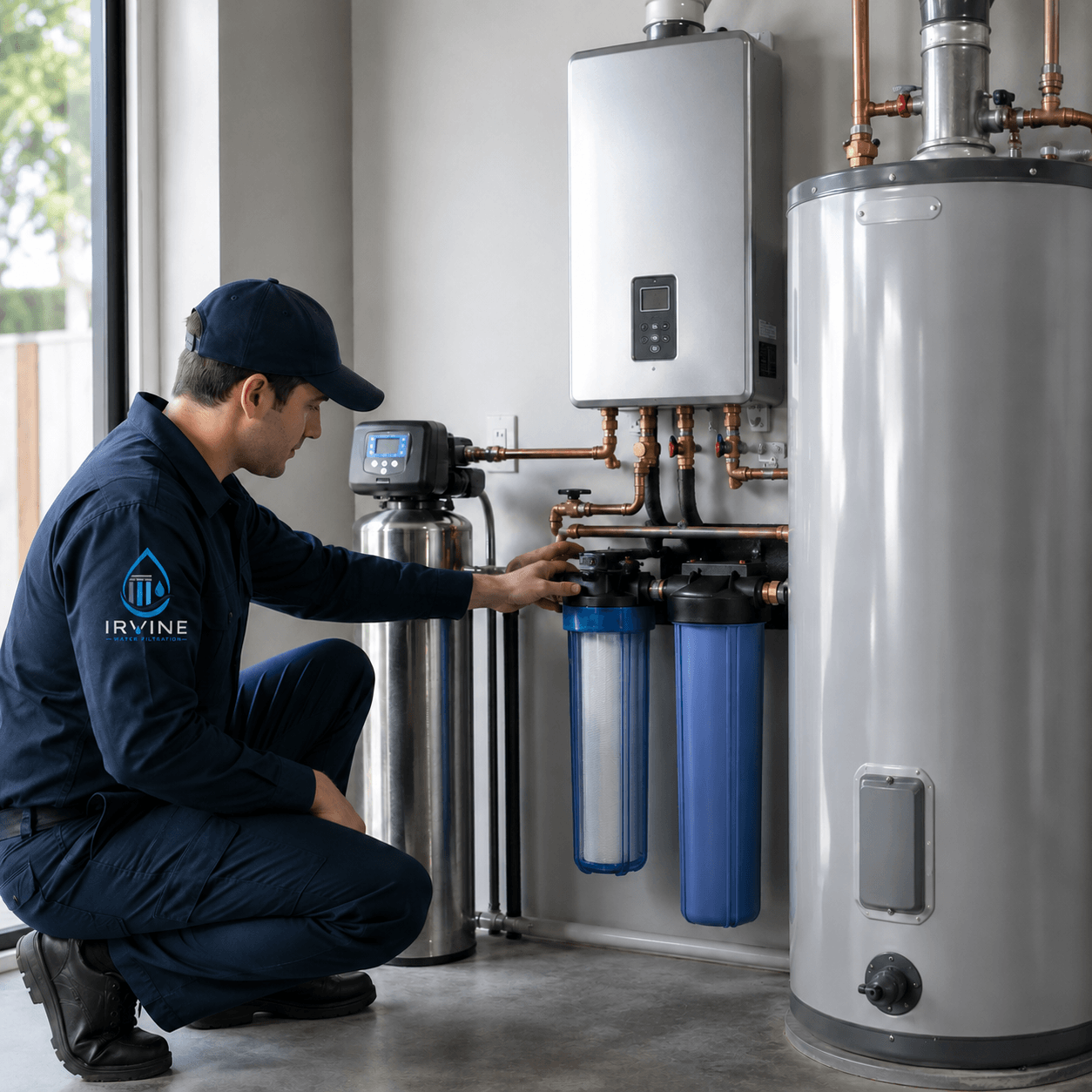
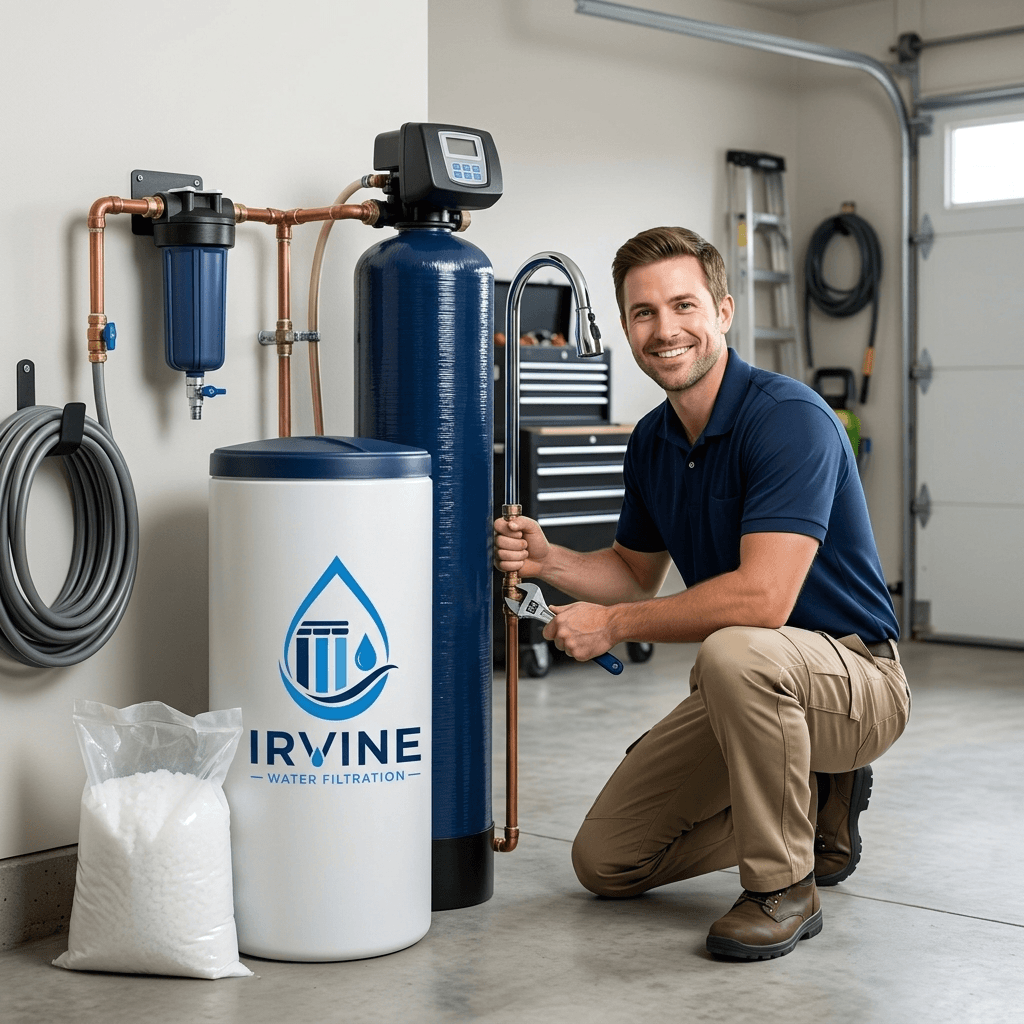
The second is plumbing reality. A salt-based unit needs a point of entry on the main line, floor space for two tanks, a drain for the brine and a nearby outlet. Plenty of Irvine condos, townhomes and attached homes cannot supply all four without a project, and a renter cannot commit any of them.
The third is a mismatch between the complaint and the cure, which is the quiet one. If what bothers you is taste, odor or what might be dissolved in your drinking water, softening changes none of it, and a filter at the kitchen tap answers the actual question for a fraction of the disruption.
The fourth is the single-appliance case. A household whose only genuine worry is the water heater — a tankless unit flagging for descaling, say — can often address that where the problem lives, through scale prevention and heater protection, instead of treating every gallon that enters the house.
What Should You Measure Before Deciding If a Water Softener Is Worth It?
Five pieces of information settle this, and all five can be collected before anyone quotes a price.
Start with current hardness in grains per gallon, measured at your own tap rather than borrowed from a district-wide average, and note the month it was taken. Because Irvine's blend changes through the year, a second reading in a different season tells you more than a more expensive first one. A professional water test turns the guess into a number you can act on.
Next, look hard at the water heater: its age, its type, and whether it has ever been descaled. A tankless unit throwing a scale code is a different case from a young tank that has never complained.
Third, write down the actual complaint in the order it bothers you — spotting, stiff laundry, crust on fixtures, soap consumption, a heater losing ground. Anything on that list that is not about hardness belongs to a different device.
Fourth, check the physical install: main-line access, a drain, an outlet, and room for a brine tank. Fifth, how long you expect to stay in the house, because the return on this purchase arrives slowly, through appliance life and energy, rather than in the first quarter.
Making the Call on Your Own Water
This turns on one comparison, made honestly: the measured hardness at your tap against the specific thing you want to stop happening. High grains per gallon with visible scale, a water heater losing ground and laundry that never comes out soft is the case where removing the minerals justifies the salt, the regeneration water and the brine question this district raises. A moderate reading paired with one irritation usually argues for treating that irritation directly and leaving the whole-house equipment alone. Get the number first, in the season you are standing in, and let it tell you which of those two situations you are in.
If the reading lands somewhere in the middle and you would rather not guess at it, that is the point where a test and a look at the proposed install location earn their keep. Irvine Water Filtration handles water softener installation and the water testing and analysis that should come before it, for homes across Irvine and the surrounding Orange County communities.
Related services: Water Softener Installation, Scale Prevention & Heater Protection, Water Testing & Analysis, and Irvine Water Filtration.